 SkipTheMid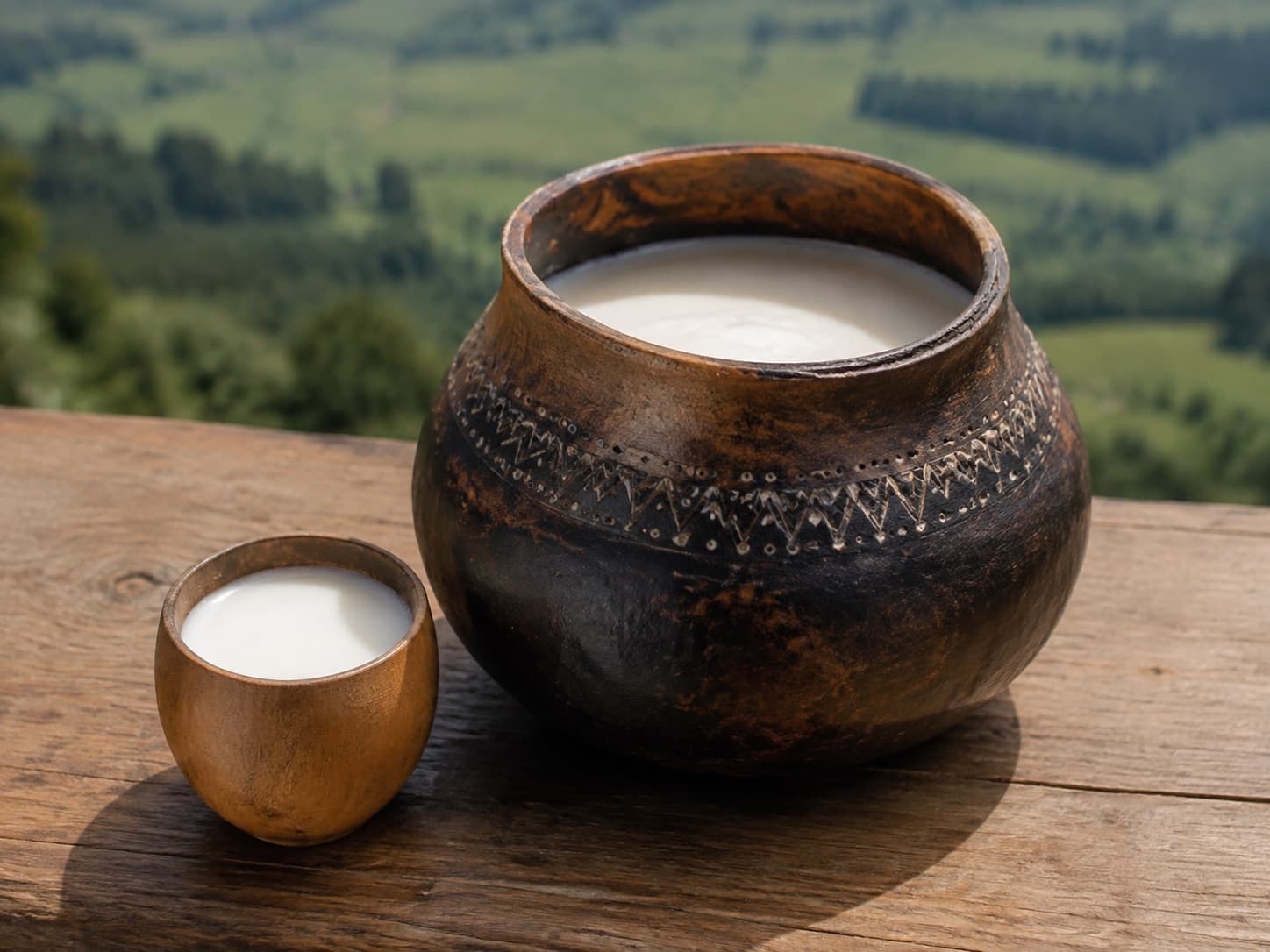
Mursik
Eldoret, Kenya
A fermented milk so culturally loaded that Olympic gold medalists are welcomed home with a gourd of it. Among the Kalenjin people of Kenya's Rift Valley, the runners who have dominated world distance running for half a century, mursik is fresh cow or goat milk fermented for days inside a sotet, a specially carved gourd whose interior has been scrubbed and lined with charcoal embers from the senetwet tree (African olive). That charcoal lining is everything: it sterilizes the gourd, imparts a distinctive smoky-ashen flavour and a faint grey tint, and acts as a natural preservative that let pastoralist herders store milk for weeks without refrigeration. The result is thick, tangy, almost yoghurt-like, with a campfire edge unlike any dairy in the world. Mursik is poured at weddings, naming ceremonies, and homecomings, and ceremonially smeared on the foreheads of returning champions. It's daily sustenance and sacred symbol in one, yet beyond the highlands of western Kenya almost no one has tasted it.
Ingredients
- 2 litresfresh whole cow or goat milk
- 1 small piececharcoal embers from senetwet (African olive) or guava wood
- 1 wholeclean gourd (sotet) or glass jar
Directions
- 1
Scald the milk by bringing it to a gentle boil, then let it cool to room temperature.
- 2
Char a small piece of clean hardwood until glowing, then use it to scrub and smoke the inside of the dry gourd or jar until coated with fine ash.
- 3
Pour the cooled milk into the smoke-lined gourd and seal it.
- 4
Leave to ferment at room temperature for 3-5 days, swirling once a day, until thick, tangy, and faintly grey from the charcoal.
- 5
Taste from day 3 onward and refrigerate once the desired sourness and smoky flavour develop.
- 6
Shake well and serve cold in a cup or gourd alongside ugali or roast meat.